
When retiring data-bearing equipment, businesses face a basic choice: securely erase the storage so the hardware can be reused, or physically destroy the media so it can never be read again. Both are legitimate. The right one depends on the device, the sensitivity of the data, and what you want to happen next.
What data erasure is
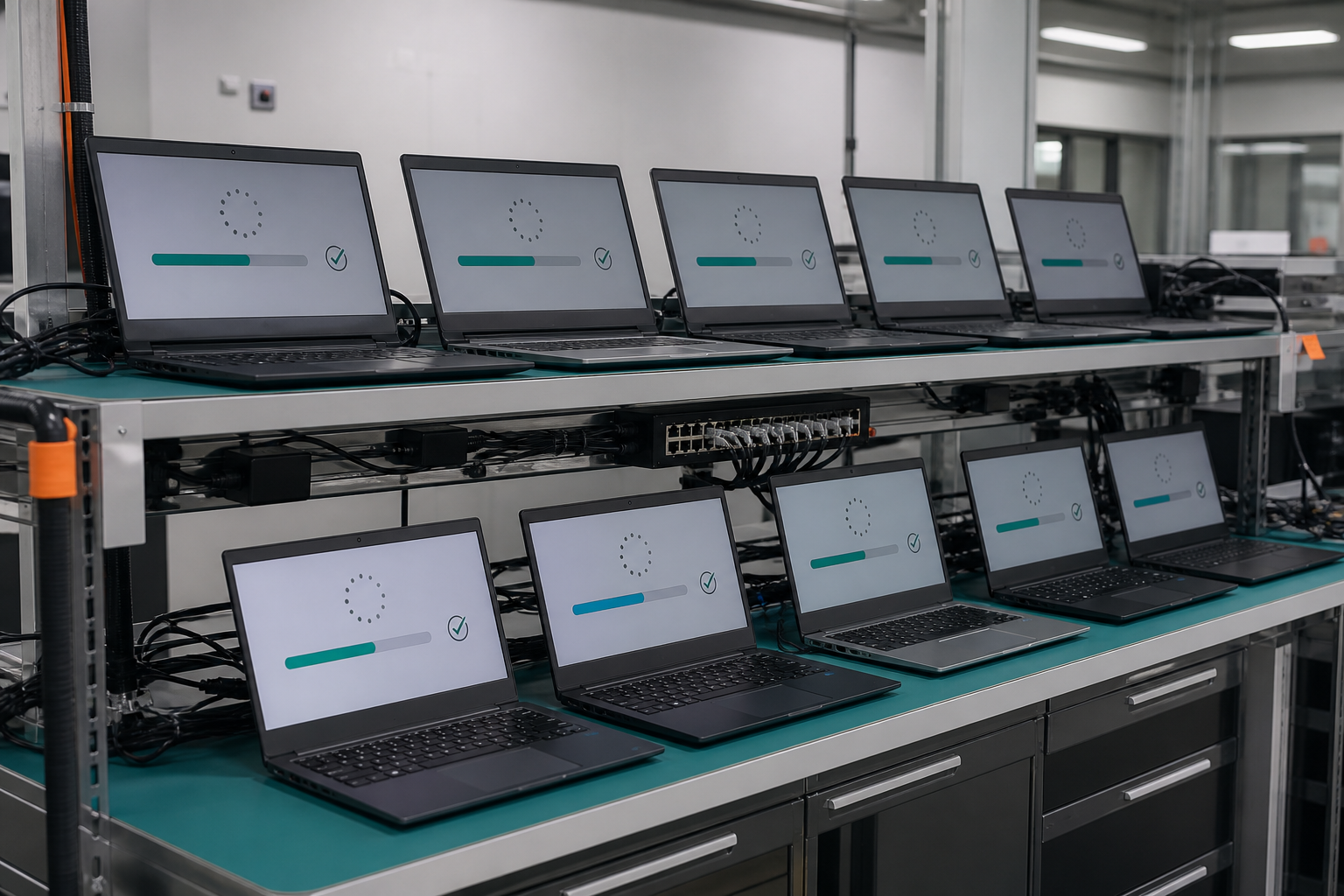
Data erasure, or sanitisation, uses software to overwrite or reset storage so the original data cannot be recovered, while leaving the device intact and usable. Reputable processes are scoped with reference to standards such as NIST SP 800-88 Rev. 2, and produce an erasure report per device. Erasure is the right choice when equipment still has life left and you want to redeploy, remarket or sell it. Learn more about data sanitisation and erasure.
What physical destruction is
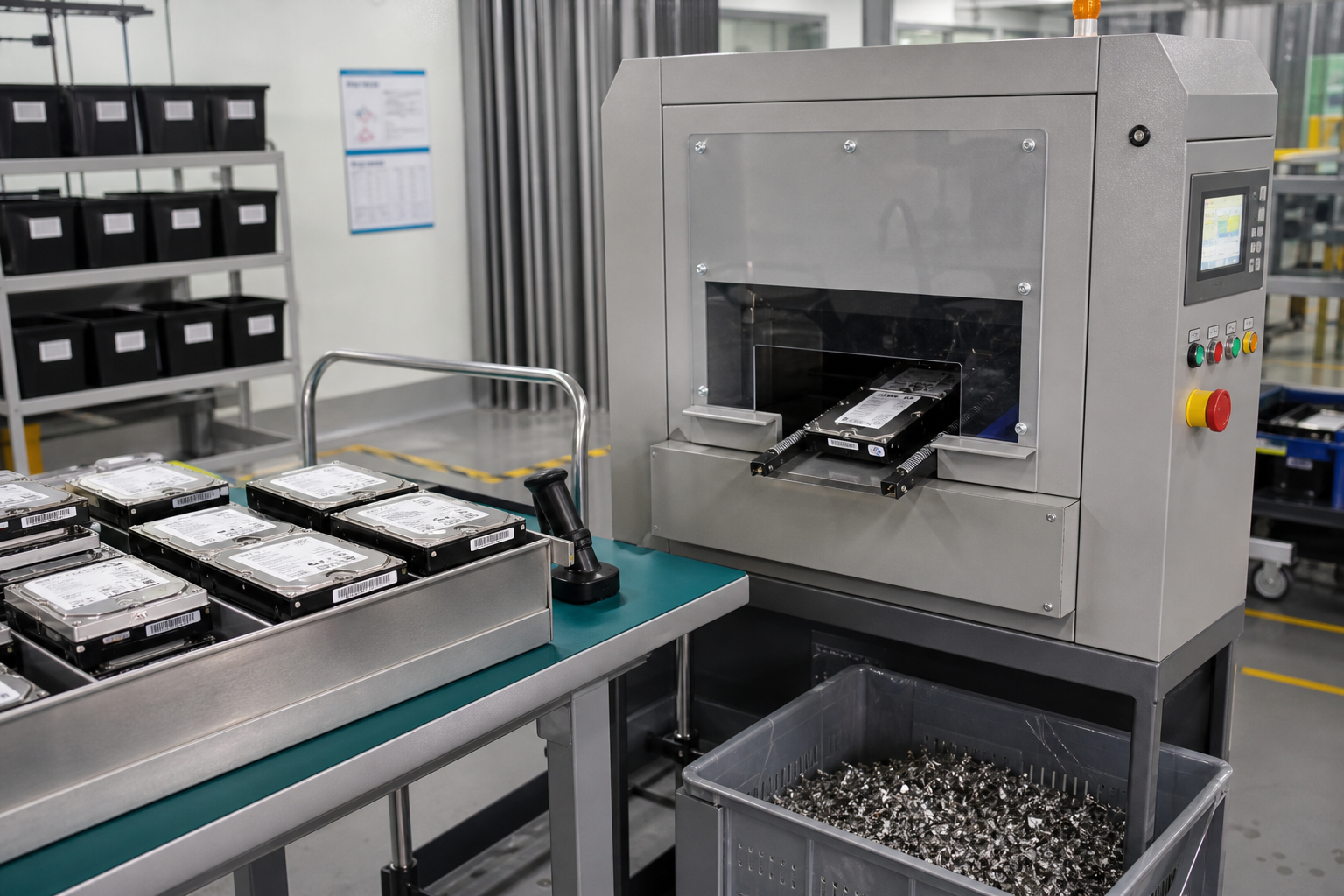
Physical destruction permanently alters the media, through shredding, crushing or degaussing, so it cannot return to normal use. It is the right choice for drives that are damaged, obsolete, or that hold especially sensitive information where you want the certainty of a destroyed device and a Certificate of Destruction. See physical data destruction.
When to erase
- The device is in working order and has resale or redeployment value.
- You want to keep the hardware in service or recover value from it.
- A documented erasure report is sufficient for your internal controls.
When to destroy
- The drive is faulty, unreadable, or cannot be reliably sanitised.
- The device is end of life with no reuse value.
- Your risk profile calls for physical destruction and a certificate.
SSDs and hard drives are not the same
The two cannot be treated interchangeably. Traditional hard drives (HDDs) are magnetic and can be degaussed or overwritten. Solid-state drives (SSDs) store data differently, so degaussing does not work and erasure must use SSD-appropriate methods. The correct technique depends on the media, which is why the method should be confirmed during scoping rather than assumed.
Don’t forget the paperwork
Whichever route you choose, the documentation is what makes it defensible: an erasure report for sanitised media, or a Certificate of Destruction for destroyed media, plus asset or quantity reporting to reconcile against your inventory.
Can you do both?
Often, yes. A typical retirement mixes the two: usable machines are erased and moved to value recovery, while faulty or highly sensitive drives are destroyed. A good provider scopes the split with you up front. If you are weighing the options for a project in Johor Bahru, get in touch and we will recommend the right mix for your assets.